
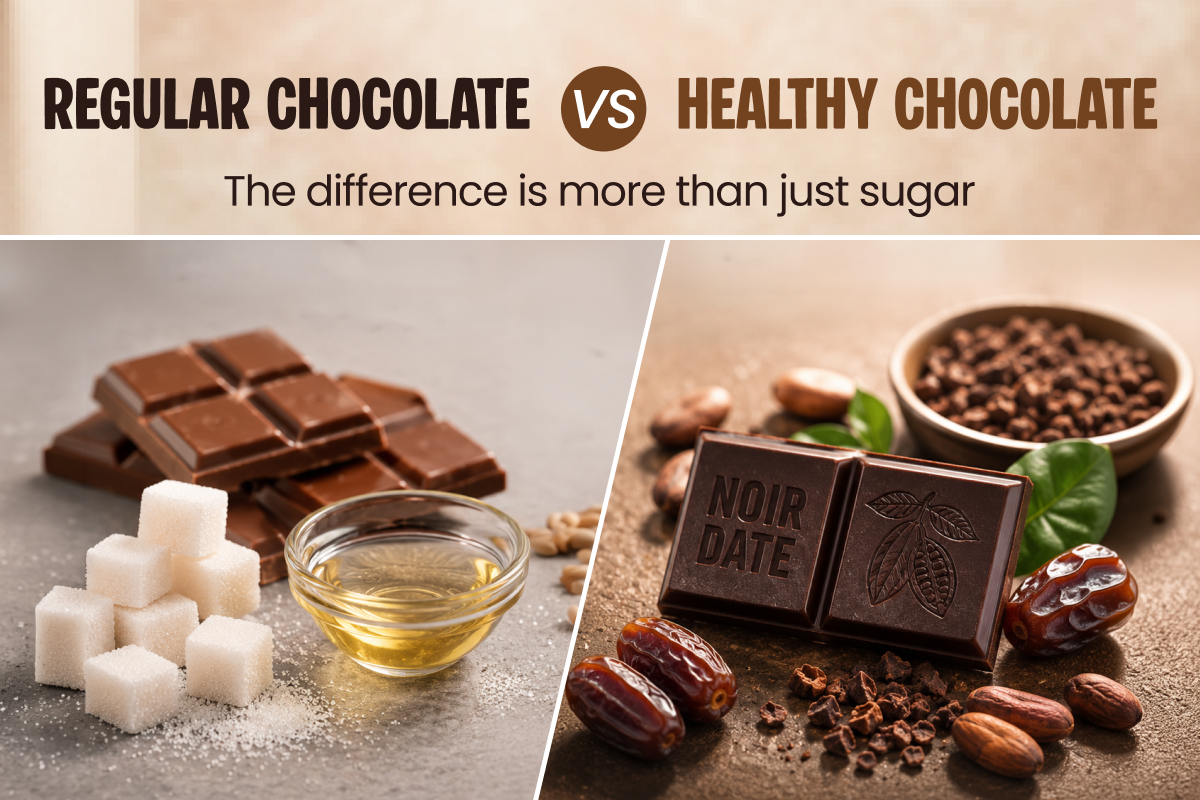
Healthy Chocolate vs Regular Chocolate: What Should You Really Choose?
Chocolate is one of the most loved indulgences, yet also one of the most misunderstood.
For many, it sits in a grey area — something to enjoy occasionally, but often associated with guilt, sugar spikes, and overconsumption.
Over the last few years, a new category has emerged — healthy chocolate
But what does that really mean? And more importantly, how is it different from the regular chocolate most people consume every day?
If you are trying to make better food choices without giving up on indulgence, the answer lies not in avoiding chocolate, but in understanding it better.
What Regular Chocolate Is Really Made Of
Most conventional chocolates available in India are formulated for mass consumption. The priorities are simple: taste, shelf life, and cost efficiency.
This typically results in ingredient lists that include:
-
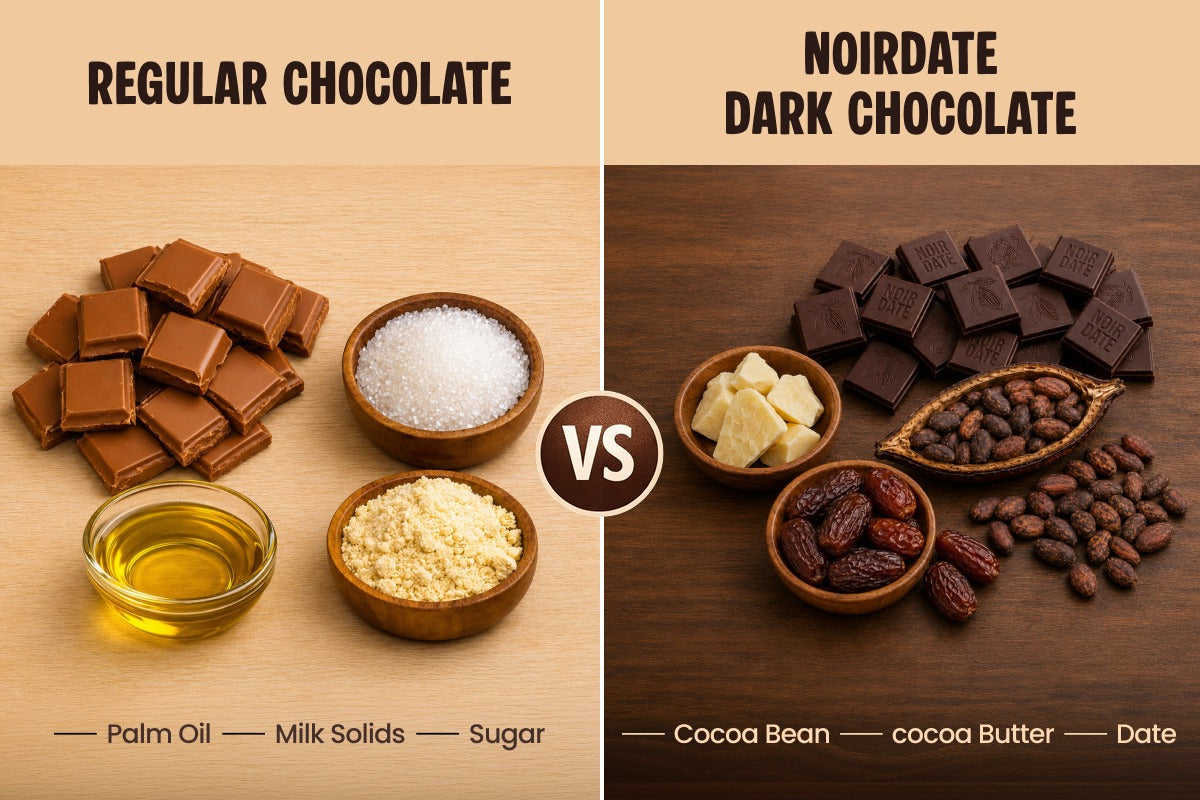
Refined sugar, often as the primary ingredient
-
Low cacao content
-
Vegetable fats such as palm oil used in place of cocoa butter
-
Additives and emulsifiers to improve texture and stability
At first glance, this may not seem concerning. But the way these ingredients interact with the body tells a different story.
Refined sugar is rapidly absorbed, causing a quick spike in blood sugar levels followed by an equally sharp drop. This creates a cycle of temporary satisfaction and recurring cravings.
The use of vegetable fats like palm oil further impacts the experience. While cost-effective, these fats do not deliver the same richness, texture, or satiety as cocoa butter. The result is a chocolate that feels lighter, melts faster, and often leaves you reaching for more.
In essence, regular chocolate is designed to be consumed in larger quantities, not to satisfy in smaller ones.
Why the Experience Matters More Than the Label
Many consumers assume that switching to dark chocolate automatically makes their choice healthier. While dark chocolate does offer certain advantages, the label alone is not enough.
The real distinction lies in the ingredient quality and composition.
A chocolate that still relies on refined sugar or low-grade fats behaves very similarly to regular chocolate in the body. It may taste slightly more intense, but it does not fundamentally change the cycle of cravings.
This is why the idea of a sugar free chocolate alternative has gained attention — not as a trend, but as a necessity for those looking to break this cycle.
What Defines a Better Chocolate
A genuinely better chocolate is not about restriction. It is about formulation.
Key characteristics include:
-
High cacao content for depth and intensity
-
No added refined sugar
-
Clean, minimal ingredient profile
-
Use of cocoa butter instead of vegetable fats
When these elements come together, the experience changes. Instead of encouraging overconsumption, the chocolate becomes more satisfying in smaller portions.
This is where the concept of healthy chocolate in India is evolving — from being a marketing label to becoming a functional category.
The Role of Sweeteners: Why It Changes Everything
The type of sweetener used in chocolate plays a defining role in how it affects the body.
Refined sugar leads to:
-
Rapid absorption
-
Short-lived energy
-
Increased cravings
In contrast, natural alternatives like dates offer a very different profile.
Dates provide:
-
Natural sweetness
-
Dietary fiber
-
Slower digestion
The presence of fiber helps moderate how sugar is absorbed, preventing sharp spikes and crashes. This leads to a more stable energy response and, importantly, better control over cravings.
This makes date sweetened chocolate a far more balanced option compared to both traditional chocolate and artificially sweetened variants.
Cocoa Butter vs Vegetable Fats: A Critical Difference
Another often overlooked aspect is the source of fat used in chocolate.
High-quality chocolate uses cocoa butter, which contributes to:
On the other hand, many mass-market chocolates use vegetable fats like palm oil. While these improve shelf life and reduce costs, they alter the fundamental experience.
Chocolates made with vegetable fats tend to:
-
Melt differently
-
Feel less rich
-
Deliver lower satisfaction per bite
This is one of the reasons why such chocolates are easier to overconsume. They do not provide the same sense of completion.
Understanding Cravings: The Missing Piece
Most people associate chocolate cravings with a lack of discipline. In reality, cravings are often a response to how food is formulated.
When chocolate is high in refined sugar and low in satiety, it triggers a loop:
Craving → Consumption → Temporary relief → Crash → Craving again
Breaking this loop requires more than willpower. It requires a change in the product itself.
When chocolate combines:
It becomes inherently more satisfying. The need to consume larger quantities reduces naturally.

Why Portion Control Becomes Easier
One of the most powerful shifts with better chocolate is portion control.
Regular chocolate encourages mindless eating. It is easy to consume large quantities without feeling fully satisfied.
In contrast, chocolate designed with higher cacao and natural fiber creates a sense of completion much faster.
A smaller portion — even as little as 15 grams — can feel sufficient.
This changes the relationship with chocolate from indulgence without limits to indulgence with control.
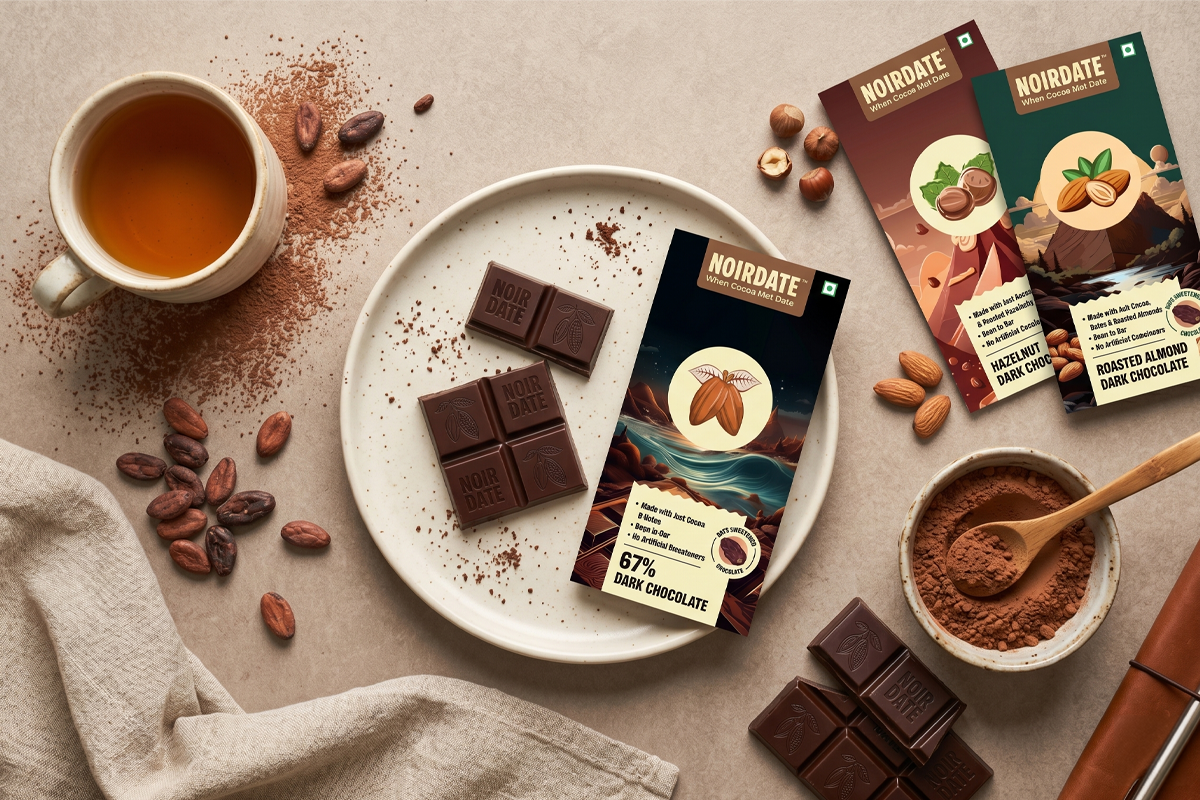
Where Noirdate Fits In
Noirdate is built on this principle of controlled indulgence.
It combines:
-
No added refined sugar
-
Cocoa butter for a richer experience
The result is a chocolate that is designed not to be eaten more, but to be enjoyed better.
By focusing on portion size and ingredient quality, it aligns with the needs of consumers who want to enjoy chocolate without falling into a cycle of cravings.
Who Should Consider Switching
The shift towards better chocolate is not limited to a specific group. It is relevant for anyone who consumes chocolate regularly and wants a more balanced experience.
It is particularly useful for:
-
Individuals dealing with frequent sugar cravings
-
Office professionals prone to mid-day snacking
-
Those looking for healthier snacking options in India
-
Consumers trying to reduce refined sugar intake without eliminating indulgence
The goal is not perfection, but consistency in making better choices.
Making the Switch in a Practical Way
Transitioning does not require drastic changes.
Start with simple steps:
-
Replace your regular chocolate with a no added sugar chocolate
-
Pay attention to portion size
-
Consume it slowly and mindfully
-
Use it during your usual craving windows
Over time, this changes not just what you eat, but how you experience it.

Final Perspective
Chocolate does not need to be removed from a healthy lifestyle. It needs to be redefined.
Regular chocolate is engineered for consumption.
Better chocolate is designed for satisfaction.
When you choose chocolate that prioritises ingredient quality, balanced sweetness, and portion control, it stops being a trigger and becomes a tool.
The difference is subtle, but the impact is significant.
Experience the Difference
For those looking to explore this shift, starting small makes the most sense.
Trying a variety of flavours in controlled portions allows you to understand what works best for your taste and routine.
The Noirdate Discovery Set offers that starting point — a simple way to experience chocolate differently, without giving it up.

Leave a comment
This site is protected by hCaptcha and the hCaptcha Privacy Policy and Terms of Service apply.