
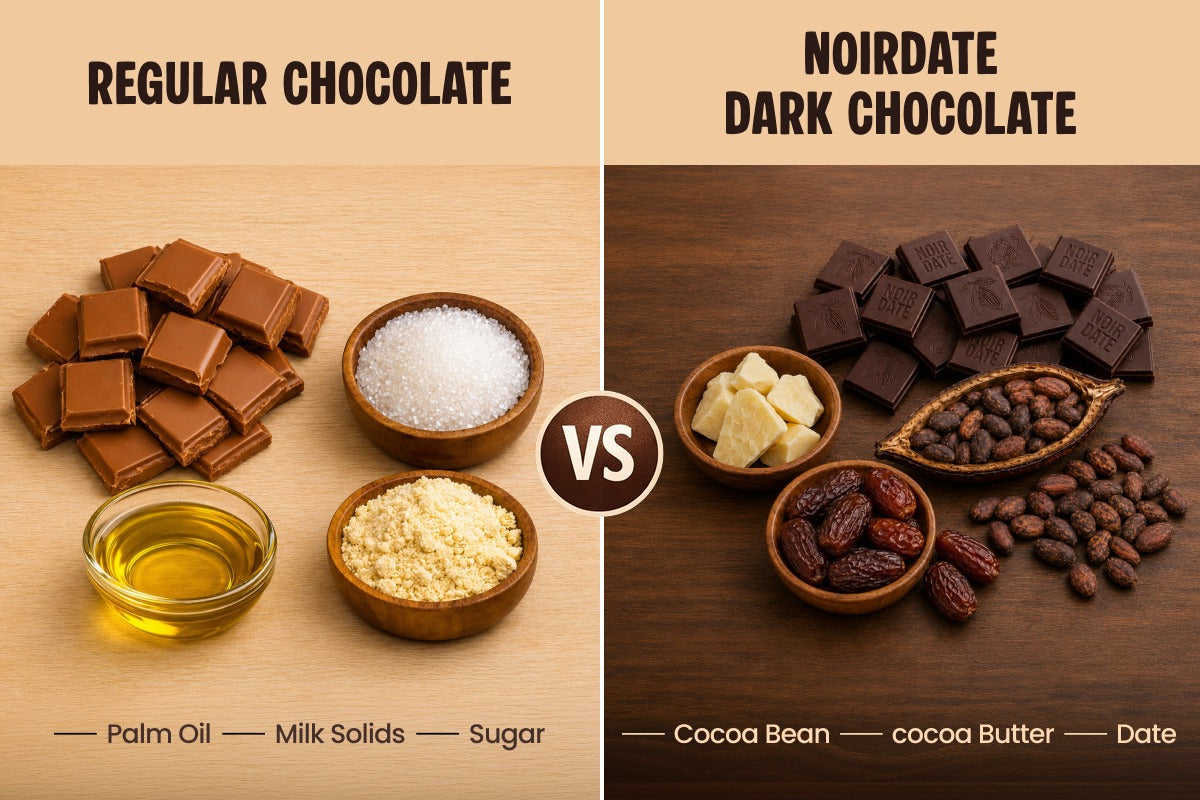
Dark Chocolate vs Regular Chocolate
What Makes Them Different?
A no-nonsense guide for anyone who wants more from their chocolate bar
Turn over any regular chocolate bar and read the first ingredient. Go on, there is no rush.
Sugar. Almost every time, it is sugar. Not cocoa. Not the rich, complex bean that chocolate is supposed to be about. Sugar — sitting right there at the top of the list, the loudest thing in the room.
That one observation changes everything. Because once you see it, you cannot unsee it. And once you taste dark chocolate the way it is meant to be made — cocoa first, nothing hiding behind sweetness — regular chocolate starts to feel like a compromise you no longer need to make.
Here is what is actually going on inside those two very different bars.
Everything Starts with the Cacao
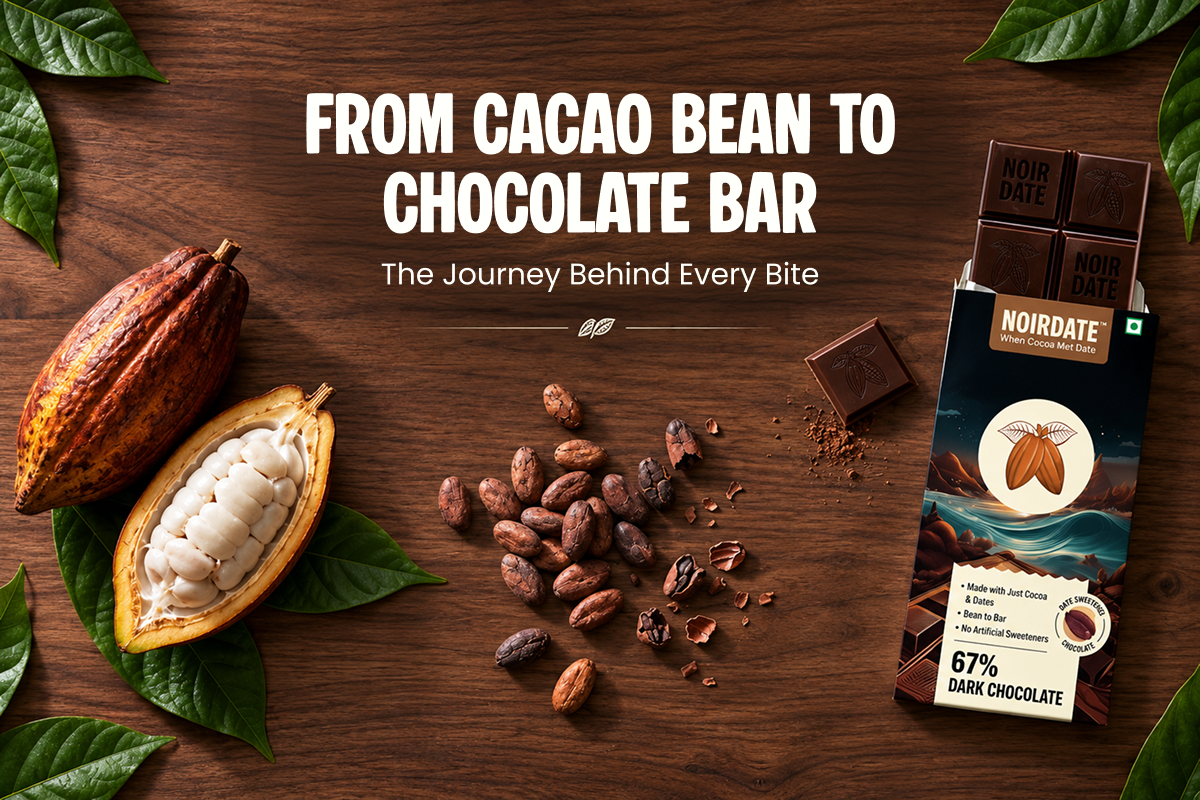
All chocolate — every single variety — begins with cacao beans. These are the fermented, dried seeds of the cacao tree, and they contain within them one of the most complex flavour profiles in nature. Hundreds of aromatic compounds. Notes that can range from fruity to nutty, earthy to floral, depending on where the tree grew and how the beans were processed.
After harvest, cacao beans are fermented in wooden boxes for five to seven days — a process that is not optional. Fermentation is where flavour is born. Then they are sun-dried, roasted in small batches, cracked, winnowed to remove the shell, and ground into a rich paste called cocoa mass. This is the soul of chocolate.
What separates a dark chocolate bar from a regular one is simply what happens to that cocoa mass next — and what gets added, or buried, along the way.

What Regular Chocolate Actually Is
Milk chocolate typically contains between 10% and 40% cocoa. The rest is milk solids, refined sugar, and vegetable fats. It is engineered to be sweet, smooth, and universally appealing — and it succeeds brilliantly at exactly that.
But here is the trade-off: at those cocoa levels, sugar and milk are doing almost all the work. The cocoa bean is barely audible. You are tasting a recipe built around sweetness, not a product built around the bean.
White chocolate takes this to its logical conclusion — zero cocoa solids. Just cocoa butter, milk, and sugar. It is sweet and creamy, but it has left the cocoa bean entirely behind.
None of this is dishonest. Regular chocolate is exactly what it says it is. The problem is that most of us were never told there was another way.
The cocoa bean contains everything chocolate needs to be great. The only question is whether the maker is brave enough to let it speak.
What Dark Chocolate Actually Is
Dark chocolate flips the ratio entirely. It contains between 55% and 100% cocoa — no milk, far less sugar, nothing masking the bean. At these levels, the cocoa stops being a background note and becomes the whole conversation.
The number on the wrapper matters. A 67% dark chocolate bar is 67% pure cocoa-derived ingredients. A 75% bar pushes that further, intensifying depth and reducing sweetness. The higher the cocoa percentage, the more honest the chocolate is about what it actually is.
At 60% to 70%, you start noticing things you never tasted before — a fruity brightness, a quiet nuttiness, a finish that lingers rather than disappearing the moment the sweetness fades. This is not bitterness. This is flavour. The kind that has been in the cocoa bean all along, waiting for someone to stop drowning it out.
The Sugar Question — and Why It Matters
Most people assume dark chocolate is simply “less sweet” regular chocolate. The real difference runs deeper than that.
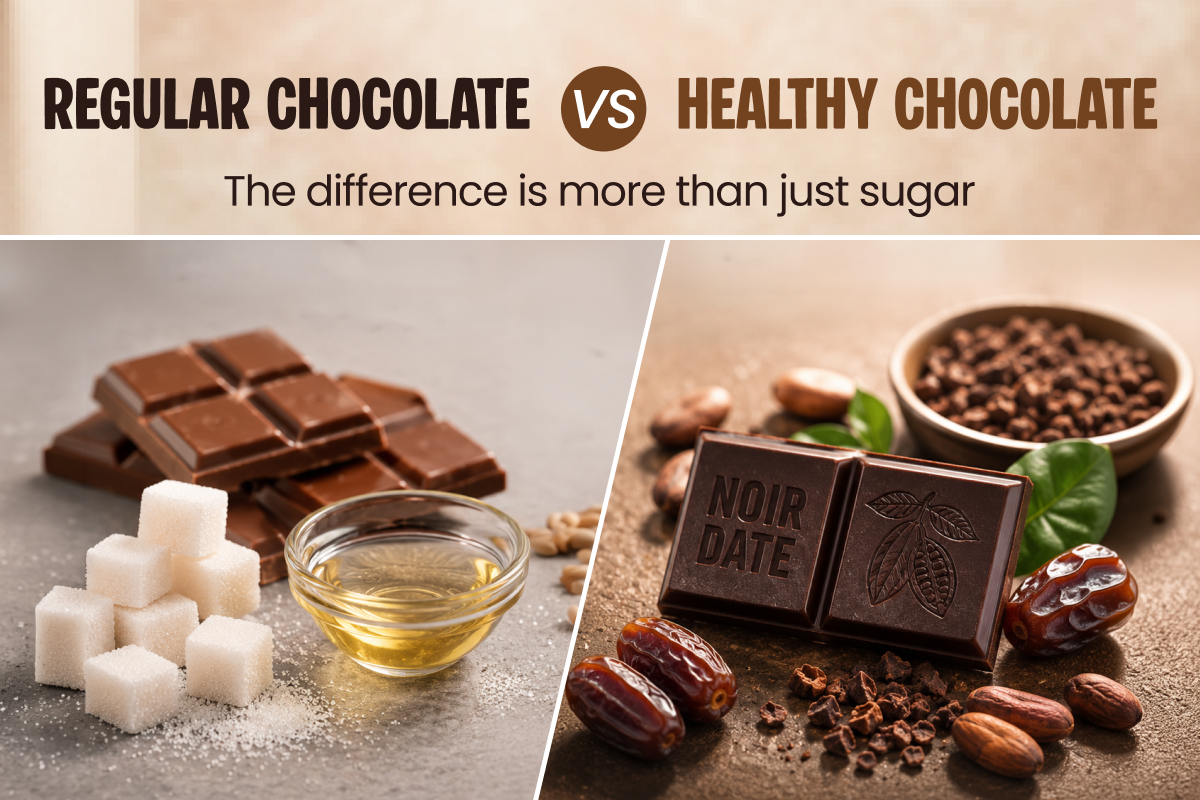
In regular chocolate, refined sugar is the primary ingredient. It is cheap, it is dominant, and it trains your palate to expect sweetness as the main event. The cocoa is incidental.
In a well-made dark chocolate, sweetness plays a supporting role — it balances the cocoa's depth without overpowering it. And what the sweetener is made of matters too. Refined sugar spikes and fades. Natural sweeteners like dates bring a mellower, rounder sweetness that does not scream over the cocoa — they let it breathe.
Ordinary Chocolate starts with sugar. Great dark chocolate starts with the bean. The single reversal changes everything you taste.
Reading a Label Like You Mean It
Here is how to tell, in ten seconds, which chocolate actually prioritises cocoa:
First ingredient: If it is sugar, the chocolate was built around sweetness. If it is cocoa mass or cocoa beans, it was built around flavour. This one check tells you almost everything.
Cocoa percentage: Anything below 50% is milk chocolate territory. 60% to 70% is where dark chocolate starts to reveal itself. Above 75%, you are in serious, immersive cocoa territory.
Ingredient count: Great dark chocolate has a short list — cocoa mass, cocoa butter, a sweetener, maybe an emulsifier. Long lists with artificial flavours and modified fats mean the cocoa is doing less of the work.
Bean-to-bar: This term means the maker controls the process from raw cacao beans through to finished bar — roasting, grinding, conching, tempering. That control is what produces chocolate with genuine depth and character.
The Chocolate You Actually Deserve
Regular chocolate is comforting. Familiar. There is a place for it. But it was never designed to show you what cocoa is truly capable of.
Dark chocolate — real dark chocolate, made cocoa-first from quality beans, sweetened with intention rather than habit — is a completely different experience. It is the difference between a song you hum along to and one that stops you mid-stride.
You have been eating chocolate your whole life. You have possibly never tasted it.
That is worth fixing.
Bean-to-bar. Date-sweetened. Cocoa first. · Shop at noirdate.in

Leave a comment
This site is protected by hCaptcha and the hCaptcha Privacy Policy and Terms of Service apply.