
Article: Beginner’s Guide to Dark Chocolate: How to Choose Your First Bar
Beginner’s Guide to Dark Chocolate: How to Choose Your First Bar
How to Choose Your First Bar
Where to begin, what the percentages actually mean, and why your palate was never the problem
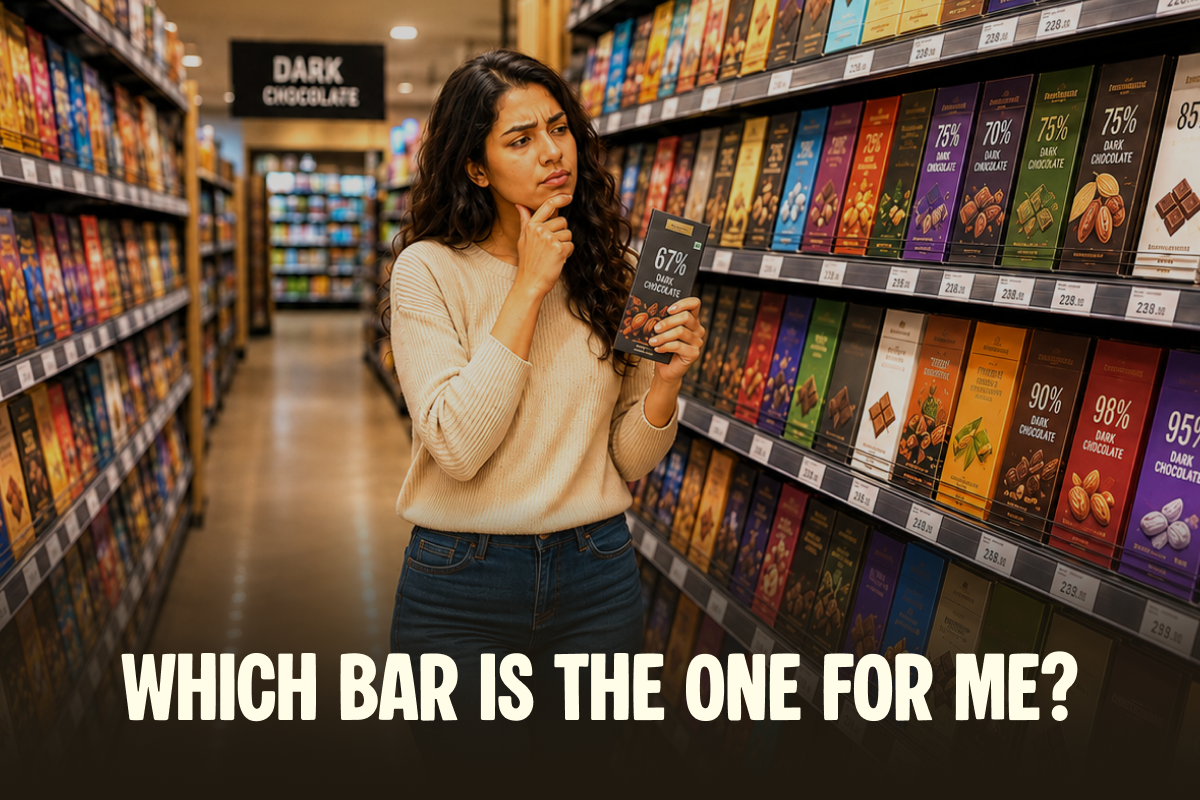
Somewhere in India right now, someone is biting into a 90% dark chocolate bar because a wellness influencer recommended it, recoiling like they've bitten a battery, and quietly deciding that dark chocolate “just isn't for me.”
Honestly? We get it.
This is one of the most common — and most avoidable — first dates with dark chocolate.
And usually, the problem isn't dark chocolate. It's the starting point.
If you've ever wanted to get into dark chocolate but got scared off by one aggressively bitter square, this one's for you. No chocolate lectures. No complicated jargon. Just a simple guide to finding your way into the world of dark chocolate — without making your taste buds file a complaint.

First Things First: What Dark Chocolate Should a Beginner Start With?
Here's the short answer:
Start somewhere around 60–70% cocoa.
It's generally the sweet spot for someone who's new to dark chocolate — enough cocoa to taste rich, deep and distinctly chocolatey, without the intensity of a very high-cocoa bar.
But here's the interesting part:
Cocoa percentage isn't the whole story.
Two chocolates with exactly the same cocoa percentage can taste completely different depending on the cocoa beans, fermentation, roasting, recipe, sweetener and chocolate-making process.
So a beautifully balanced 67% chocolate can sometimes be a much more enjoyable introduction than an aggressively bitter 85% bar.
Your first dark chocolate doesn't need to prove anything.
It just needs to make you want another square.
Why Does Dark Chocolate Taste Bitter?
Let's start with the obvious question.
Why is dark chocolate bitter?
Because cocoa itself is naturally intense.
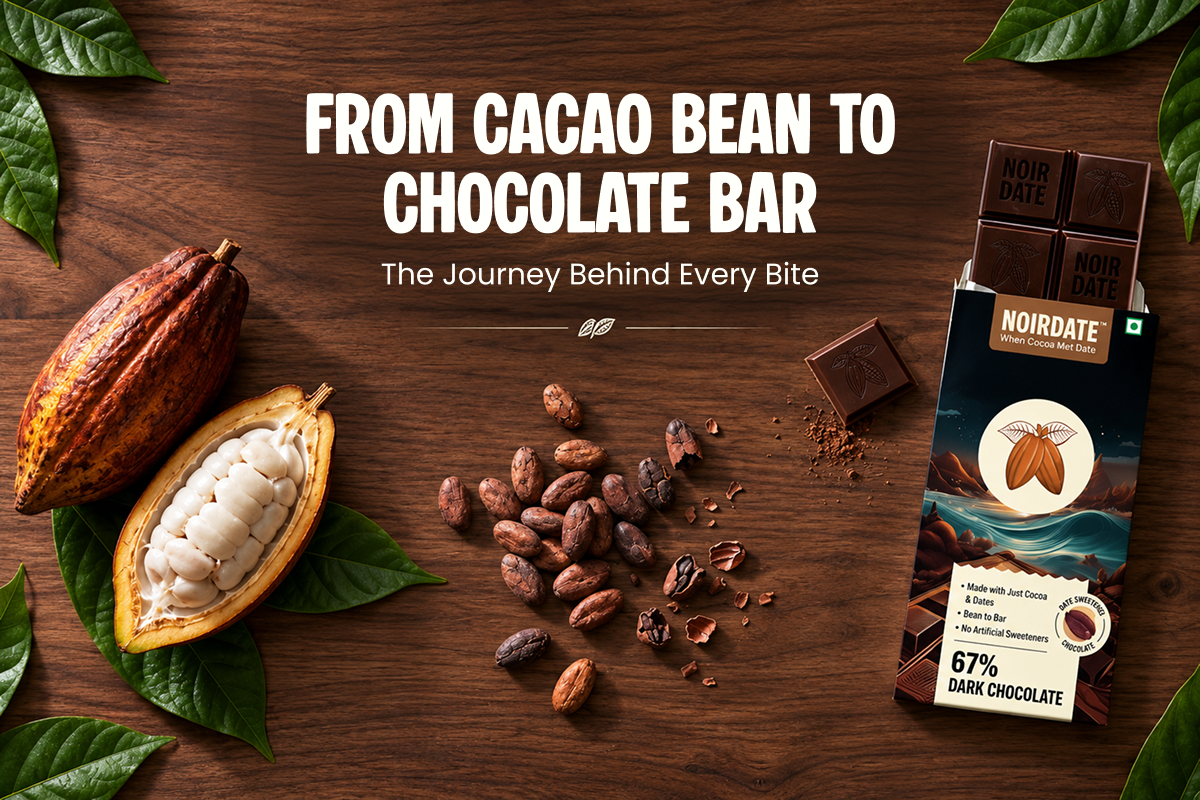
Before it becomes a smooth chocolate bar, the cocoa bean goes through fermentation, drying, roasting, grinding and several other stages. Each step influences the flavours that eventually end up in your chocolate.
Cocoa can naturally have bitter, acidic, fruity, nutty, earthy or even caramel-like notes.
Then there's the recipe.
The cocoa percentage, type of sweetener and balance of ingredients all affect how those flavours come through.
That's why saying “dark chocolate is bitter” is a little like saying “coffee is bitter.”
Sure, it can be.
But have you tried a really good coffee?
Exactly.
A well-made dark chocolate can be rounded, aromatic, fruity, nutty and surprisingly smooth.
So if your first dark chocolate tasted like punishment, don't give up on the category just yet.
You may simply have started with the wrong bar.

The Dark Chocolate Percentage Cheat Sheet
Think of cocoa percentage as your rough intensity meter.
50–60%: The Gentle Introduction
Sweeter, softer and closer to the familiar territory of milk chocolate.
Great if you're making the transition from sweeter chocolates.
60–70%: The Beginner's Sweet Spot
Rich, cocoa-forward and still approachable.
If you're starting your dark chocolate journey, this is where we'd begin.
70–80%: Getting Serious
Less sweet, more intense and more focused on the flavour of the cocoa.
Once you've developed a taste for dark chocolate, this is a fun range to explore.
80%+: The Deep End
Very cocoa-forward, less sweet and often more intense.
Not necessarily “better” — just a different experience.
And that's an important point:
Higher cocoa percentage doesn't automatically mean better chocolate.
The best chocolate is the one that balances quality, flavour and sweetness in a way you actually enjoy.
Why We Made Noirdate 67% Classic
This is exactly where Noirdate's 67% Classic Dark Chocolate comes in.
We wanted our first dark chocolate to sit right in that approachable zone — cocoa-forward enough to feel like real dark chocolate, but balanced enough that you don't need years of dark-chocolate experience to enjoy it.
It's made with Indian cocoa sourced from Idukki, Kerala, and sweetened with date powder instead of refined sugar.
The ingredient list is deliberately short, letting the cocoa and dates do the talking.
At 67%, it gives you a chance to experience dark chocolate without immediately jumping into the deep end.
Think of it as your first proper introduction to dark chocolate — not chocolate pretending to be healthy, and not chocolate trying to prove how bitter it can be.
Just good cocoa, balanced sweetness and a bar made to be enjoyed.

Your Palate Isn't the Problem
Maybe you've tried dark chocolate before and hated it.
That's okay.
Maybe 90% isn't for you.
That's also okay.
Chocolate isn't an exam, and there are no extra marks for eating the most bitter bar in the room.
Start around 60–70%. Try different cocoa origins. Pay attention to how the chocolate smells, melts and finishes. Notice the difference between sweetness and bitterness.
And most importantly, give your palate some room to discover what it likes.
Because once you find the right starting point, dark chocolate stops being something you're supposed to tolerate… and starts becoming something you actually crave.
Welcome to dark chocolate. Start somewhere delicious. · noirdate.in

Leave a comment
This site is protected by hCaptcha and the hCaptcha Privacy Policy and Terms of Service apply.